
About Chris Blair
Digital and AI transformation leader exploring how AI and advanced technology can build practical capability, strengthen organisations, create economic value and expand New Zealand’s future options.
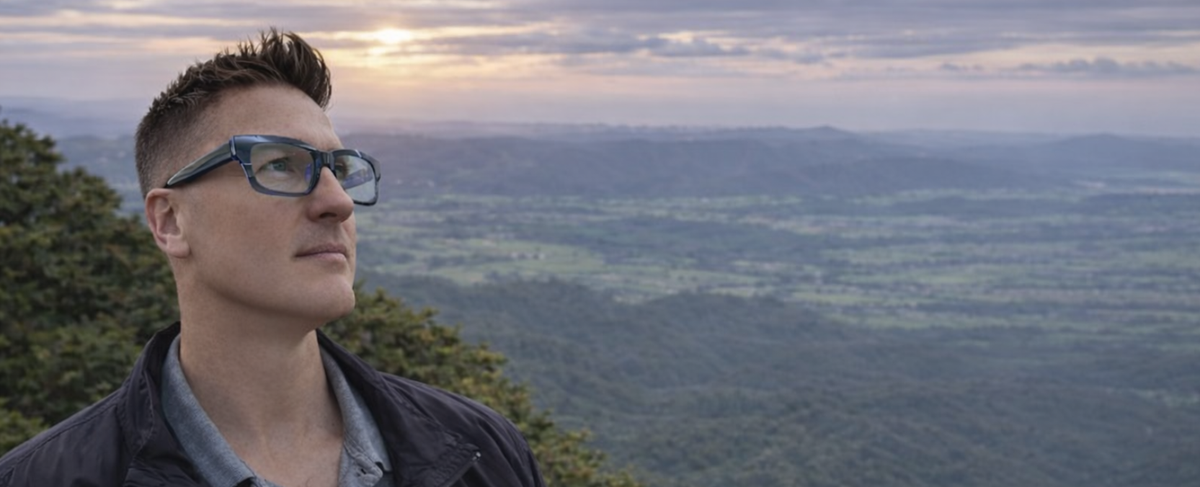
Chris’s work connects the practical decisions leaders are making today with a wider view of how technology, people, trust, infrastructure and economic systems are evolving together.
Overview
Chris is a digital and AI transformation leader with more than 25 years of experience across technology innovation, enterprise transformation, start-ups and public-sector change.
His work with leaders across business and the public sector focuses on redesigning work and services, shaping operating models, and building the organisational capabilities needed to turn emerging technology into useful and sustained value.
A consistent question runs through that work: what becomes possible when technology is connected to the people, knowledge, decisions and systems around it?
For an organisation, that can mean helping people spend less time on avoidable work and more time on judgement, relationships and higher-value contribution. It can mean redesigning a service rather than simply adding AI to an existing process. It can mean building knowledge and capability that the organisation can reuse long after an individual project has finished.
At a wider level, the same questions extend into infrastructure, trust, skills, capital, institutions, ownership and the pathways through which New Zealand creates and retains value.
Chris’s work explores those connections from the practical level of work and organisations through to the larger systems shaping the intelligence economy.
A connected approach
AI creates new capability. What organisations and countries do with that capability depends on the wider environment around it.
People need room to learn, exercise judgement and participate in redesigning the work around them.
Organisations need leadership, governance, enabling platforms and ways to turn experimentation into repeatable capability.
Trust needs to be built through identity, consent, authority, accountability, assurance and meaningful human recourse.
Infrastructure needs to connect energy, compute, data and digital systems with local capability, research, firms and markets.
Economic value depends on what is created, who captures it, what remains locally owned or reusable, and what becomes stronger because of the investment made.
Chris works across these connected levels because decisions made in one part of the system often change the options available somewhere else.
His work spans:
• global systems and infrastructure
• New Zealand’s national capability
• organisational capability and transformation
• trust and governance
• human capability and adaptation
• value creation and retention
The aim is to make these relationships easier to see, so leaders can make more deliberate choices about what they build, how people participate, how capability accumulates and what becomes possible next.
Evolution
Chris’s thinking has developed alongside several generations of digital technology.
He began in architecture and digital design, then moved through early internet gaming, mobile innovation, telco and cloud platforms, global digital ecosystems, enterprise transformation, data platforms and AI-enabled organisational systems.
The technologies changed. A deeper interest remained consistent: how new capability changes what people, organisations and economic systems are able to do.
His career has included founding early technology ventures as well as helping large organisations turn emerging digital, data and AI opportunities into practical capability.
That experience brings together two useful perspectives.
One is exploratory: seeing what a new technology may make possible before the operating model around it is fully established.
The other is practical: understanding that meaningful change still requires decisions about people, work, governance, investment, delivery and value.
That combination continues to shape the work Chris develops today.
Current areas of focus
How can organisations turn AI into capability?
AI can help people find knowledge, analyse information, prepare work, automate processes and make better-supported decisions.
The larger opportunity appears when organisations redesign the work around those capabilities.
Chris’s Studio Model explores how leadership, domain expertise, technology platforms, delivery capability and ongoing operations can work together so AI becomes part of how an organisation learns and improves.
The focus is on creating capability that can be reused and compounded, while keeping human judgement, participation and accountability visible.
What could make New Zealand stronger in an AI-shaped economy?
New Zealand already has significant strengths across sectors, research, institutions, renewable energy, digital capability, trust and communities.
Chris’s NZ-EOS work explores how those strengths could connect more effectively across economic engines, innovation pathways, infrastructure, skills, capital and institutions.
A central question is what becomes stronger because of how New Zealand pursues new opportunities: its firms, knowledge, people, infrastructure, ownership, relationships and ability to create future options.
What sits beneath the intelligence economy?
AI depends on a much larger physical and economic system.
Energy, compute, cloud infrastructure, data, connectivity, capital, institutions and trust influence where capability develops and where value accumulates.
The Machine Room and MI-ND explore these underlying systems and the relationships between them.
They help extend the conversation from AI applications into the infrastructure, dependencies and coordination that shape what organisations and countries can ultimately build.
Where does value move as AI becomes more capable?
AI is beginning to change how work happens inside organisations and how people interact with organisations.
As personal agents, organisational agents and digital platforms become more capable, they may also change discovery, customer relationships, decision rights, intermediation and who captures value.
WAVES explores the expanding footprint of AI across these environments.
Value Dynamics examines what happens after capability creates apparent value: who captures it, where it accumulates, what is retained, what is reinvested and whether it compounds into something more durable.
What makes intelligent systems worthy of trust?
Capability alone does not determine whether people will rely on an AI-enabled system.
Trust grows through clear authority, understandable decisions, appropriate consent, accountability, security, human review and the ability to challenge or correct an outcome.
Trusted by Design explores that architecture.
Chris’s wider Human Capability and Adaptation work examines how people learn, adapt roles, exercise judgement and retain meaningful agency as technology changes the systems around them.
Together, these areas connect technical capability with the people and institutions that give it practical legitimacy.
Why this work
Much of Chris’s work is grounded in Aotearoa New Zealand and in the possibilities available to a small, connected country as advanced technology changes the global economy.
New Zealand has distinctive strengths across its people, communities, knowledge, institutions, sectors and natural environment. The opportunity is to convert more of those foundations into capability that lasts.
That could mean stronger organisations and more useful public services.
It could mean researchers finding clearer pathways into industry, New Zealand firms reaching global markets, people having greater access to knowledge and opportunity, and communities having more influence over the systems that affect them.
It could also mean retaining more of the knowledge, ownership, capability and value created here, so each generation of investment builds more options for what New Zealand can do next.
Chris contributes to that work through exploration, practical transformation and systems thinking: making connections visible, developing frameworks, testing ideas against emerging evidence and helping leaders see choices that may otherwise sit across organisational or institutional boundaries.
Many of the choices involved are still open: what gets built, who participates, where capability accumulates, how trust is established and what value remains in New Zealand.
Technology changes what can be done. People, organisations and communities still shape what gets built, what is trusted, where value goes and what kind of future those choices make possible.
Two connected spaces
ChrisBlair.ai
ChrisBlair.ai is the primary home for Chris’s frameworks, essays and white papers on AI, advanced technology, organisational capability and economic systems.
It is where ideas are developed into more complete arguments, models and published work.
ChartingTheBlank.space
ChartingTheBlank.space is a separate living exploration environment where those ideas connect to what is changing now.
It brings together Signals, evidence, relationships, maps and open questions to explore how developments across technology, organisations, infrastructure and economic systems may connect.
The two spaces have different roles and are designed to work together.
ChrisBlair.ai asks what we have learned.
ChartingTheBlank asks what we are seeing.