
The New Zealand We Could Build
New Zealand can build more from what we already have - renewable energy, strong research, skilled people and ambitious businesses. By being more deliberate about what each success leaves behind and how it is reused, the next opportunity can start further ahead - building momentum for what comes next

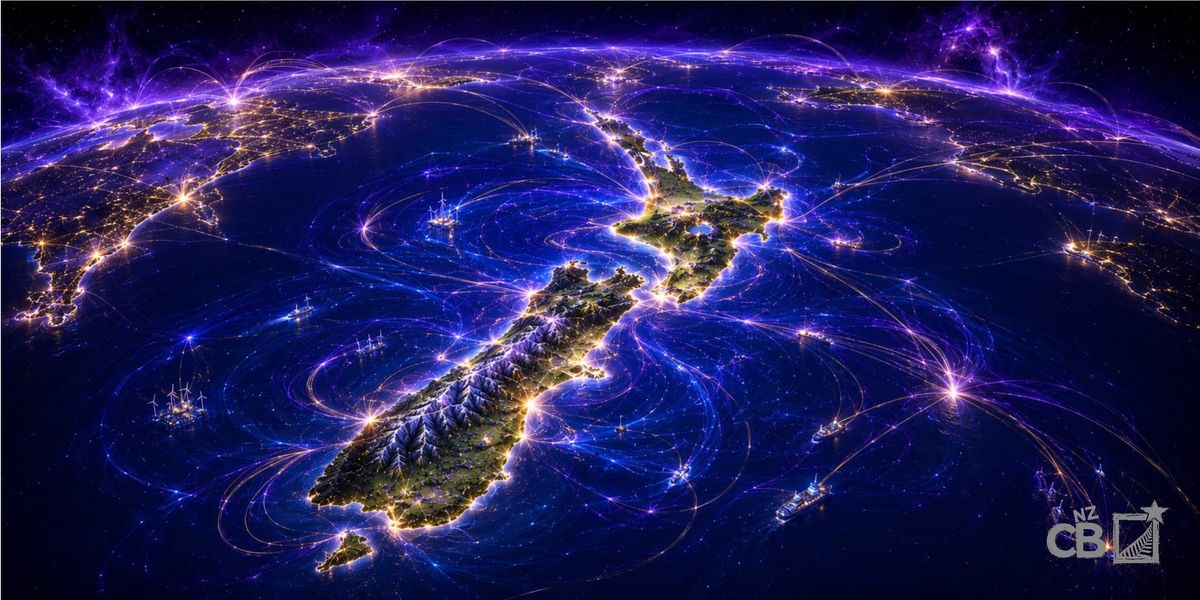
What kind of New Zealand do we want to become?
A country where ambitious businesses can start here and grow from here. Where research has clearer paths into products, companies and services. Where people can build deep expertise and rewarding careers, communities can become more prosperous, and more people have choices about the lives they can build here.
New Zealand already has useful ingredients: renewable energy, strong research institutions, internationally connected businesses, skilled people and trusted institutions.
The opportunity is to connect those strengths so successful activity creates capability that lasts beyond one project, company or investment.
Economic activity already creates spillovers as people move between jobs, suppliers learn and relationships form.[5] The larger opportunity is to increase how much useful capability persists, how practically it can be reused, and whether the next opportunity can begin from a stronger position.
When more of that capability persists and can be reused, one success can help create better conditions for the next.
From a strength to an advantage
Energy makes the difference between a strength and usable capability easier to see.
New Zealand already generates a high proportion of its electricity from renewable sources, including hydro, geothermal and wind.[1] That gives New Zealand a potentially valuable starting position as electricity becomes more important across transport, industry, computing and other parts of the economy.
The resource is only the starting point. A geothermal resource beneath the ground is still a long way from a business employing people and selling something valuable to the world. Productive activity may also need reliable transmission, digital connectivity, skilled people, land, suppliers, investment and customers.
A current example is the potential data-centre development being explored by Contact Energy and CDC in Taranaki. Contact and CDC describe the Stratford site as combining an existing grid connection, high-capacity fibre and a skilled technical workforce, with proposed electricity supply supported by new renewable generation from Contact's development pipeline.[2] The project remains at the exploration stage, with consenting, design, customer engagement and development planning under way, and neither company has committed to construction.[2] The proposed Stratford development makes the wider point tangible: energy becomes more useful when the other conditions needed for productive activity can connect around it.
The specific opportunity could be computing infrastructure, advanced manufacturing, research or something we have not yet anticipated.
A strength becomes more valuable when people can actually build from it.
From connection to capability
The same principle applies to knowledge.
A university or research team can develop valuable new knowledge, but a discovery still needs routes into application. Researchers may need to work with engineers, entrepreneurs, investors, established businesses and customers before an idea becomes a product, service or company.
New Zealand has now made that bridge more explicit. The New Zealand Institute for Advanced Technology officially launched in Auckland on 21 August 2026 as New Zealand's fourth Public Research Organisation.[3] It focuses on developing and commercialising advanced technologies, and its model is intended to strengthen connections between researchers, industry and investors, with research investments and partnerships spanning universities, industry and research organisations.[3][4]
The research remains important. So does the pathway that allows knowledge to travel beyond where it was created.
A smaller version of the same challenge appears inside organisations adopting AI. Teams can keep buying better AI “cars” while paying less attention to the roads between them: the shared knowledge, data, standards and learning that allow one team's experience to help another.
When that learning can travel, the next team starts further ahead.
Economic activity can already produce this kind of spillover through worker mobility, supplier relationships and collaboration.[5] Infrastructure and commercial relationships created for one activity may also find further uses.
The strategic opportunity is more specific. It is to pay attention to what useful capability remains after the immediate activity and whether it can practically support what comes next.
A successful project may leave little reusable capability behind, forcing the next opportunity to rebuild skills, supplier expertise, relationships or infrastructure. Another may leave a stronger base: experienced people, more capable suppliers, durable relationships, useful infrastructure and ways of working that can be applied again.
Paying attention to persistent capability does not mean every piece of knowledge becomes public or every capability should be shared. It means more of what successful activity creates can remain present in forms that later businesses, projects and people can build from.
Rocket Lab offers a recognisable New Zealand illustration. On 26 February 2026, it announced the acquisition of long-time supplier Precision Components Limited in Auckland and the establishment of the Auckland Machine Complex, dedicated to high-tech, high-tolerance machined components and engineering services for the global aerospace industry.[6] The immediate story is company growth. The acquisition is also direct evidence of specialist aerospace manufacturing capability being retained and expanded within Rocket Lab in Auckland. Whether that capability diffuses more widely is a separate question.
The causal chain this essay is proposing is simple: activity creates capability; some capability persists; what persists can be reused; and the next opportunity can start further ahead.
Building a flywheel
This is where the idea of a flywheel becomes useful.
A flywheel takes effort to get moving. As momentum builds, each turn helps the next. Capability can work in much the same way.
One activity creates knowledge, skills, relationships, infrastructure or new businesses. Some of that capability remains useful after the immediate work is complete. Later activity can draw on it, begin from a stronger position and create further capability of its own.
The flywheel turns again.
The process is conditional. A successful investment or project does not automatically create a wider national benefit, and some capabilities will be too specialised, inaccessible or short-lived to carry forward.
The flywheel gives us a practical question to ask:
What could this leave behind that makes the next opportunity easier?
The question can apply to infrastructure, a growing company, research or work inside an organisation. It does not imply one institution planning every connection. It asks the relevant businesses, researchers, investors, suppliers, institutions and government to consider both the immediate outcome and the capability that may remain afterwards.
The longer-term value of an activity is then partly what it produces today and partly what New Zealand becomes better able to do tomorrow.
What the flywheel could make possible
A stronger starting position matters because of what it could allow people, businesses and communities to do next.
More capable businesses can take on harder problems and create more interesting and rewarding work. People can build deeper expertise through successive projects and bring experience gained overseas into organisations and industries with enough depth to use it well.
Regions can build distinctive strengths too. A growing industry or new infrastructure can create work for local suppliers, deepen specialised skills and attract further activity. When those capabilities persist, a place becomes better able to support what comes next.
Opportunity and expertise can reinforce each other. Better opportunities help people develop deeper skills. Deeper skills allow organisations to attempt more ambitious work, creating further opportunities, relationships and investment.
These outcomes are not guaranteed. Capability can dissipate, become obsolete or remain concentrated. The flywheel helps distinguish activity that ends largely with its immediate output from activity that also changes what becomes possible afterwards.
That can mean stronger businesses, rewarding work, deeper expertise, useful infrastructure, more prosperous communities and greater choice about where people live, what they build and what they contribute.
A bigger ambition than a target
The Government has set a target of doubling the value of New Zealand's exports by 2034.[7]
That is a useful target. It gives us something tangible to measure and puts focus on creating more value that people around the world want to buy.
The target is not the ambition.
The deeper question is the one we began with:
What kind of New Zealand do we want to become?
By 2034, the export number will tell us something important. We should also be able to ask whether New Zealand's productive capability has deepened: whether more businesses can grow internationally, research has stronger pathways into industry, people have developed deeper expertise, infrastructure supports further activity, and regions have built strengths others can build from.
And has each generation of opportunity made the next one easier to pursue?
The more durable opportunity is turning individual strengths and successes into capability that can carry forward.
Over time, the starting point changes.
2034 gives us a useful point on the horizon. The deeper ambition is to reach it with stronger businesses, deeper capability, more prosperous communities and greater choice about what New Zealand can build next.
Explore further
Read the fuller argument
The New Zealand Opportunity essay goes deeper into how energy, research, trust, infrastructure, capital, organisations and human capability could connect so that more value, knowledge and future choice can remain and compound in New Zealand.
Explore these ideas with AI
ChartingTheBlank AI Explorer launched on Saturday 29th of August and provides another way into this work: ask questions, explore the relationships between the ideas, and follow the Signals and emerging evidence as the picture continues to develop.
References
- Ministry of Business, Innovation and Employment, Energy in New Zealand 2026. Released 20 August 2026.
- Contact Energy and CDC Data Centres, Contact partners with CDC to explore data centre development. 10 August 2026.
- New Zealand Government, New Zealand Institute for Advanced Technology launches in Auckland. 21 August 2026.
- Ministry of Business, Innovation and Employment, New Zealand Institute for Advanced Technology. Last updated 2 March 2026.
- OECD, Productivity and innovation in regions. Accessed 31 August 2026.
- Rocket Lab, Rocket Lab Establishes New Precision Machining Complex, Expands Manufacturing Footprint with Acquisition of Precision Components Ltd. 26 February 2026.
- Ministry of Business, Innovation and Employment, Promoting global trade and investment, Going for Growth. Accessed 31 August 2026.